The capability race is only half the story. The other half is control, and most enterprises haven’t asked that question yet.
Indian enterprises are deploying AI at a pace that would have seemed implausible five years ago. Fraud detection, document intelligence, customer service automation, operations monitoring, the use cases are multiplying. What isn’t multiplying, at the same rate, is a serious conversation about where that AI lives, who holds the keys to it, and what happens when the business behind the platform decides to change the rules.
What Is a Sovereign AI Platform in India, and Why Does It Matter for Your Enterprise?
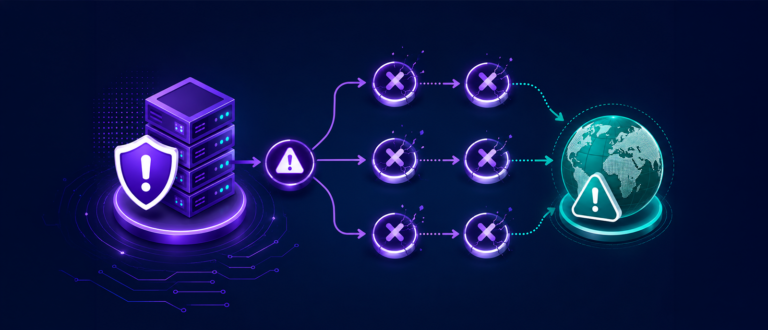
When an enterprise deploys AI through a public cloud hyperscaler, whether that’s a managed LLM API, a cloud-native AI service, or a hosted data platform, it is, in effect, renting its intelligence. The model runs on someone else’s infrastructure. The inference happens in someone else’s data centre. The data sent for processing crosses boundaries the enterprise doesn’t fully control.
This isn’t a hypothetical risk. It is an architectural fact.
For industries under regulatory oversight in India, banking under the Reserve Bank of India’s data localisation guidelines, capital markets under SEBI, and any enterprise handling personal data under the Digital Personal Data Protection Act (DPDP), this creates a compounding problem. Compliance isn’t just about having a policy. It’s about being able to prove, at audit time, that your data stayed where you said it would, processed the way you said it was, and accessed only by whom you authorised.
A hyperscaler SLA doesn’t give you that proof. It gives you a shared responsibility model, a polite way of saying the responsibility isn’t entirely theirs. When something goes wrong, it may not be easy to establish exactly what happened.
Is a Sovereign AI Platform Just About Storing Data in India?
No, and this is the most common misconception. Sovereignty, in the context of a sovereign AI platform, doesn’t mean building everything from scratch or refusing to use advanced AI capabilities. It means owning the conditions under which those capabilities operate.
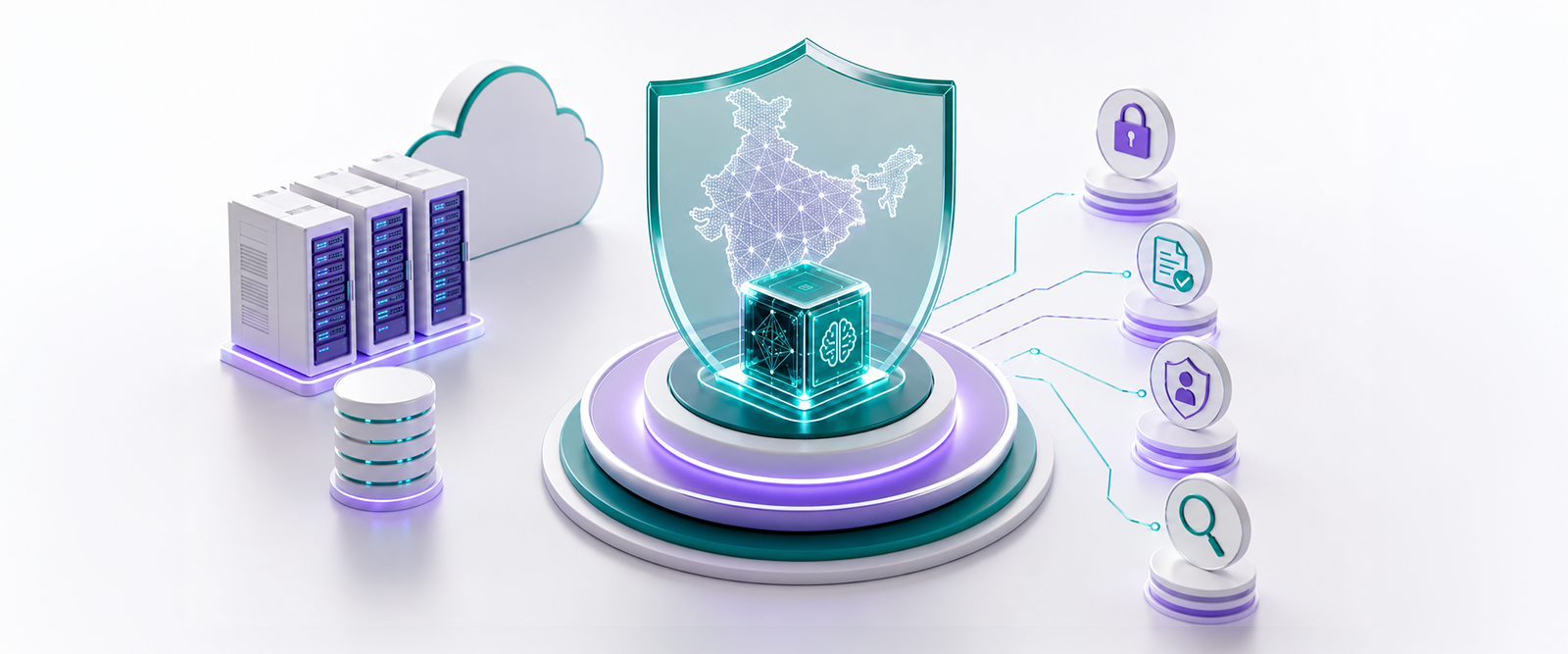
A sovereign AI platform in India gives an enterprise:
1 Data residency
Your data stays within your defined perimeter, whether on-premises, in a private cloud, or in a government-certified data centre in India
2 Model custody
You control which models run, when they’re updated, and what they have access to
3 Audit transparency
Every inference, every data movement, every agent action is logged, traceable, and available to your compliance and security teams
4 Compute independence
The platform runs on infrastructure you control, not on capacity allocated to thousands of other tenants
None of this prevents enterprises from using the most capable AI models available. It changes where and how those models are deployed, and who holds accountability for the outcome.
Why Do Indian Enterprises Need a Sovereign AI Platform More Than Anyone Else?
The argument for a sovereign AI platform India is more acute than in many other markets, for several converging reasons.
Regulatory density is rising. Regulatory bodies’s IT governance framework for regulated entities, SEBI’s cloud adoption guidelines, and the DPDP Act together create a compliance environment where data handling is a board-level obligation. Enterprises that built AI on convenient hyperscaler infrastructure two years ago are now having to re-engineer those stacks.
Critical infrastructure has specific mandates. BFSI, Power, telecommunications, and government-adjacent enterprises operate under sector-specific frameworks that treat data and AI operations as infrastructure, not applications. The standards applied to these sectors don’t accommodate a “we’ll check with the cloud vendor” response to an audit question.
Geopolitical resilience is a real factor. The Atmanirbhar Bharat and Make in India frameworks have shifted enterprise procurement thinking. The question of whether an organisation’s AI capability can survive a disruption in foreign-vendor access, whether through policy shifts, licensing changes, or export controls, is no longer theoretical.
Talent and institutional knowledge stay local. When AI systems are built and operated on sovereign infrastructure, the expertise that builds them, maintains them, and evolves them is embedded in your teams, not abstracted away inside a vendor’s support function.
What Does a Sovereign AI Platform Actually Include?
A sovereign AI platform
Is not a single product. It’s a stack, from the physical compute layer through to the applications that run on top of it.
At the infrastructure layer
AI-ready compute (GPU/TPU), hardened networking, and storage purpose-built for AI workloads, deployed in a location you control.
At the platform layer
Orchestration for AI models, agent frameworks, data pipelines, and observability tooling, all configured to your compliance and security policies, not a vendor’s default settings.
At the application layer
Purpose-built solutions for specific enterprise domains, agentic SOC operations, autonomous CRM workflows, full-stack observability, and resiliency operations, that inherit the governance properties of the layers beneath them.
The distinction matters because many enterprises believe they’ve addressed sovereignty by choosing a “private cloud” option from a hyperscaler. Private cloud reduces some multi-tenancy risk. It does not give you model custody, does not guarantee data localisation in the way Indian regulators define it, and does not make your AI operations auditable to your own standards rather than the vendor’s.
iStreet Network’s has built sovereignty into the platform from the ground up, not as a configuration option, but as an architectural principle.
How Do You Know If Your Organisation Already Has a Sovereign AI Gap?
If your organisation is deploying AI on any meaningful scale, three questions are worth putting on the table now:
- Where does your inference actually happen? Not where the API call goes, where the data is processed, by which model, on whose hardware.
- What would an RBI or DPDP audit of your AI workflows reveal? If the answer requires a call to a vendor support team, that’s a gap.
- What is your continuity plan if your primary AI vendor changes its pricing, access terms, or availability? Sovereign infrastructure means you don’t need one, because the platform is yours.
These aren’t questions designed to slow down AI adoption. They’re the questions that make AI adoption durable.
Explore What Sovereign AI Looks Like for Your Organisation
iStreet builds Sovereign AI-Native Platforms, Infrastructure, and Solution Offerings for enterprises that need AI they can stand behind, in front of regulators, customers, and their own boards.
If you’re evaluating your AI architecture or preparing for upcoming compliance reviews, explore how a sovereign AI platform can be the foundation your next phase is built on.
Learn more → Explore iStreet’s Sovereign AI Platform